

5 Things You Can Do for National Radon Action Month
January marks the start of a new year, bringing with it resolutions, fresh starts, and National Radon Action Month. While health resolutions often focus on diet and exercise, the air quality in your home deserves equal attention. Radon is an invisible, odorless gas that naturally occurs in the soil, yet it poses a serious health risk when it accumulates indoors. In fact, it ranks as the second leading cause of lung cancer in the United States.
National Radon Action Month serves as a dedicated time for homeowners to learn about this radioactive gas, test their homes, and take necessary steps to lower high levels. Ignoring the potential presence of radon puts your family’s long-term health at risk, but the good news is that testing and mitigation are straightforward processes. Whether you have lived in your home for decades or just moved in, now is the perfect time to assess your indoor air quality.
By understanding how radon enters your home and implementing effective solutions, you protect your living space from dangerous exposure. This guide walks you through things you can do for National Radon Action Month.
Understand Radon: Risks and Sources
To effectively tackle a problem, you must first understand it. Radon forms from the natural decay of uranium in soil, rock, and water. Because it is a gas, it moves up through the ground and enters buildings through cracks in floors, walls, construction joints, and gaps around service pipes. Once trapped inside an enclosed space like a home or office, it concentrates to levels that can become hazardous.
The primary danger of radon lies in its radioactivity. When you inhale radon gas, radioactive particles can become trapped in your lungs. Over time, these particles damage lung tissue and increase the risk of lung cancer. The risk is even higher for smokers, but non-smokers are certainly not immune. Since you cannot see, smell, or taste radon, the only way to know if you and your family are at risk is to test for it.
Many people assume radon problems are specific to regions or older homes, but this is a misconception. High radon levels have been found in every state and in every type of home. Weather, soil composition, and home construction all influence indoor radon levels, meaning your neighbor’s low test result does not guarantee your safety.

Test Your Home for Radon: DIY vs. Professional
Testing is the only way to know if your home has elevated radon levels. The EPA recommends taking action if your home’s radon level is four picocuries per liter (pCi/L) or higher. Fortunately, testing is easy and affordable. You generally have two main options: do-it-yourself (DIY) test kits or professional testing services.
DIY Test Kits
For most homeowners, a DIY test kit is a great starting point. You can purchase these online or at local hardware stores. They are simple to use—you place the device at the lowest lived-in level of your home, leave it for the specified time, and then mail it to a lab for analysis. Short-term tests provide a quick snapshot of radon levels, while long-term tests (lasting 90 days or more) give a better average of year-round levels.
Professional Testing
If you are in the process of buying or selling a home, or if you prefer an immediate and highly accurate reading without mailing samples, hiring a certified radon professional is the way to go. Professionals use continuous radon monitors that measure levels hourly and provide a detailed report. This method offers a more comprehensive view of how radon levels fluctuate throughout the day.
Regardless of the method you choose, the goal remains the same: identify if a problem exists so you can fix it.
Radon Mitigation Techniques: A Quick Guide
If your test results come back with levels at or above four pCi/L, you need to install a mitigation system. The most common and effective method is Active Soil Depressurization (ASD). This system works by altering the pressure difference between the soil and the house.
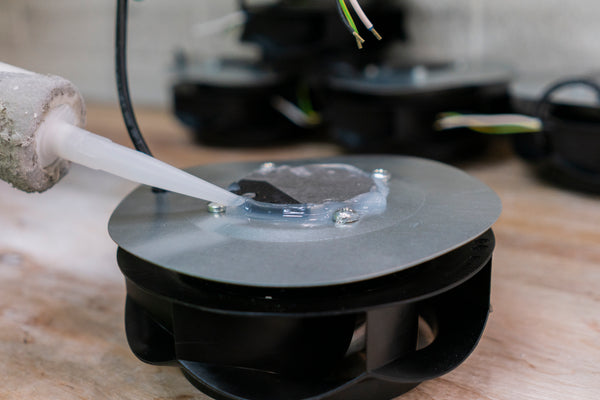
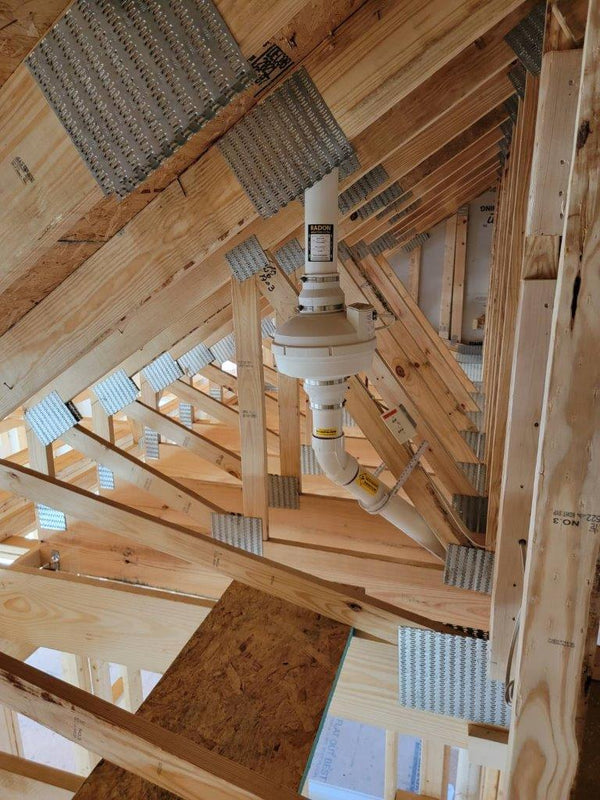
In a typical ASD system, professionals will install a pipe through the foundation floor slab. A specialized radon fan draws the radon-laden air from beneath the home before it can enter the living space. The system then vents this air outside, above the roofline, where it quickly dissipates into the atmosphere.
This process essentially creates a vacuum beneath the foundation, reversing the air flow. Instead of soil gases entering the home, the system captures them first. For homes with crawlspaces, a similar approach involves covering the earth floor with a high-density plastic sheet—a process called encapsulation—and using a vent pipe and fan to draw the radon from under the sheet.
While some homeowners attempt to seal cracks and openings in the foundation, sealing alone rarely lowers radon levels significantly. It is best used as a supplemental measure to improve the efficiency of an active mitigation system.
Choosing the Right Radon Fan for Your Home
The heart of any active mitigation system is the radon fan. Choosing the correct fan determines the success of the entire system. Not all homes require the same amount of suction or airflow, and installing the wrong fan can result in insufficient mitigation or excessive energy costs.
Their pressure and airflow capabilities generally categorize radon fans:
- Low-Wattage/Low-Pressure Fans: These work well for homes with porous sub-slab material, such as gravel, where air moves easily. They are energy-efficient and quiet.
- High-Pressure Fans: If your home sits on tight soil, clay, or sand, you need a fan that can pull hard enough to create the necessary vacuum. High-suction fans are designed specifically for these challenging environments.
- High-Flow Fans: For homes with large footprints or very porous sub-slab aggregate, a high-flow fan moves a larger volume of air to ensure coverage across the entire foundation.
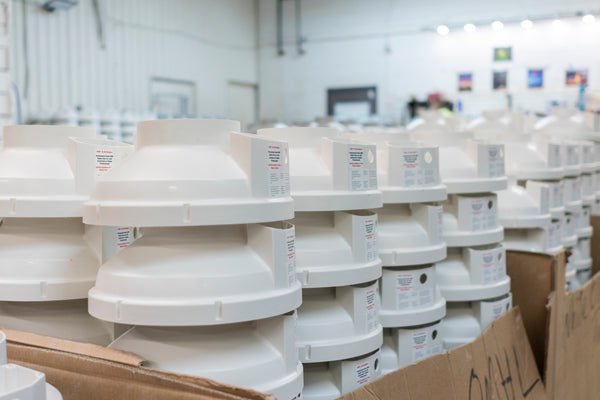
When selecting radon mitigation equipment, quality matters. At Festa Radon Technologies, we manufacture AMG radon fans that feature European motors and globally sourced materials, assembled right here in the USA. Whether you need the energy efficiency of our Maverick model or the extreme suction power of the Legend Extreme, selecting a durable, purpose-built fan guarantees your system runs reliably for years.

Spread Awareness: How You Can Help
Taking care of your own home is the first step, but National Radon Action Month is also about community. Once you have tested and mitigated your own home, help spread the word. Many people remain unaware of the risks radon poses.
Talk to your neighbors, friends, and family. Ask if they have tested their homes recently. Share your experience with testing or mitigation to demystify the process. If you are involved in local community groups or homeowners associations, suggest hosting an informational session or distributing EPA brochures.
Real estate agents and builders also play a pivotal role. Advocating for radon-resistant new construction (RRNC) techniques in new developments helps future-proof homes against radon issues. By raising collective awareness, we save lives and create healthier communities.
Take Action Today
Radon is a serious health hazard, but it is also a fixable problem. National Radon Action Month provides the perfect prompt to prioritize the air you breathe. Testing is simple, mitigation is effective, and the technology available today makes it easier than ever to reduce your risk.
Don’t wait for symptoms to appear or for a future real estate transaction to force your hand. Test your home, review your results, and if necessary, install a proven mitigation system. With the right knowledge and the right equipment, you create a safer environment for yourself and your loved ones. Make this month the time you check radon off your list and breathe easier all year long.