


Radon in Finished vs. Unfinished Basements: The Differences
Many homeowners consider their basement a valuable extension of their living space. Whether you use it for storage, laundry, or as a fully furnished family room, this lower level of your home interacts directly with the ground beneath it. This unique position makes it susceptible to an invisible threat: radon gas. Radon is a naturally occurring, radioactive gas that can seep into homes and pose significant health risks. Understanding how radon behaves in different types of basements is the first step toward protecting your family.
This information clarifies how radon enters and accumulates in both finished and unfinished basements, helping you make informed decisions about testing and mitigation.
Understanding Radon
The natural decay of uranium in soil, rock, and water produces radon gas. It is colorless, odorless, and tasteless, making it impossible to detect without specialized testing equipment. When radon escapes from the ground into the outdoor air, it disperses quickly and is not a health concern. However, when it enters an enclosed space like a home, it can accumulate to dangerous levels. The Environmental Protection Agency (EPA) advises homeowners to take action when radon levels reach or exceed 4.0 picocuries per liter of air (pCi/L). Long-term exposure to elevated radon levels is the leading cause of lung cancer among non-smokers.
Unfinished Basements and Radon Entry
An unfinished basement often has exposed foundational elements, such as concrete walls, dirt or gravel floors in a crawl space, and visible sump pits. These characteristics create numerous pathways for radon to enter your home. Radon is a soil gas, and it will follow the path of least resistance from the ground into the air. Porous concrete walls and floors, as well as unsealed cracks and joints, provide easy entry points. Sump pumps and floor drains also create direct conduits from the soil into your basement. Because of these many openings, radon levels are often higher in unfinished basements, where the gas can accumulate without obstruction.
Radon in Finished Basements
A common misconception is that finishing a basement—by adding drywall, flooring, and paint—seals it from radon. While these improvements can create a more comfortable living area, they do not create an airtight barrier. Radon can still penetrate the foundation and become trapped behind finished walls and beneath flooring. Once inside, the gas can seep through small gaps around baseboards, electrical outlets, and plumbing fixtures.
Furthermore, finished basements can contribute to the “stack effect.” This process occurs when warm air rises within a home, creating lower pressure in the lower levels, including the basement. This pressure difference acts like a vacuum, actively pulling soil gases like radon from the ground into the house. Even a well-finished basement can experience high radon levels due to this effect, which can then circulate the gas throughout the entire home.

Why You Must Test for Radon
Given that radon can accumulate in any home, regardless of its foundation type, testing is the only way to know if you have a problem. Every home should be tested for radon, whether the basement is finished, unfinished, or just a crawl space. You can choose between short-term and long-term testing methods.
- Short-term tests, which typically last from two to ninety days, provide a quick snapshot of your home’s radon levels.
- Long-term tests lasting more than 90 days offer a more accurate picture of your home’s average radon concentration over time, accounting for daily fluctuations.
You can purchase do-it-yourself (DIY) test kits from hardware stores or online, or you can hire a certified radon professional to conduct the testing for you.
Radon Mitigation Strategies
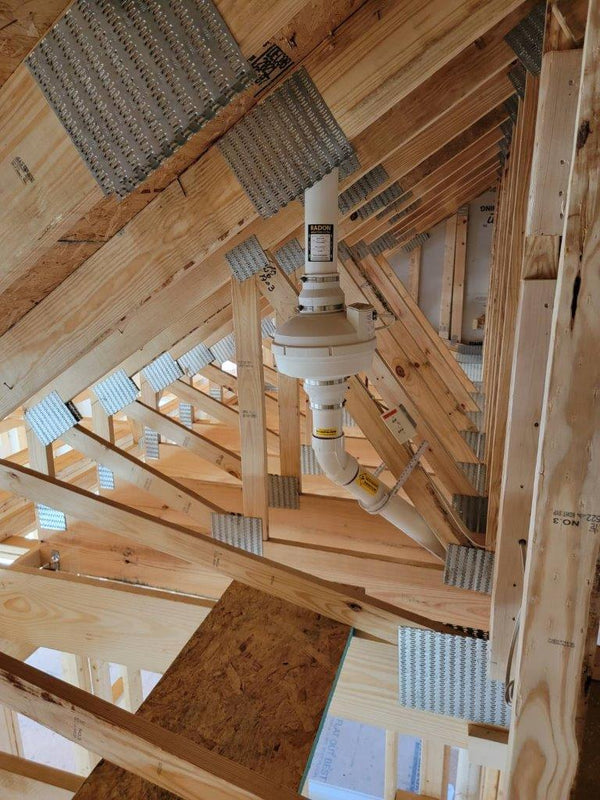
If testing reveals elevated radon levels, you must take action. Several mitigation techniques work effectively in both finished and unfinished basements. The most common and reliable method is active soil depressurization (ASD). This system uses a fan and a ventilation pipe to draw radon from beneath the foundation and vent it safely above the roofline.
For unfinished basements, mitigation often involves sealing visible cracks and foundation openings. In homes with crawl spaces, a technique called crawl space encapsulation is highly effective. Specific strategies for finished basements may include sealing accessible cracks and gaps, but a professionally installed ASD system is typically the most reliable solution. Improving overall home ventilation can also help reduce radon concentrations.
Crawl Space Encapsulation
Crawl space encapsulation is a popular solution for preventing both radon and moisture from entering a home. This process involves completely sealing the crawl
space with heavy-duty vapor barriers. The encapsulation creates an impermeable liner that covers the floor and walls of the crawl space, effectively blocking soil gases and water vapor. High-quality crawl space encapsulation materials, like reinforced polyethylene sheeting and specialized sealing tape, are crucial for a durable and effective installation. At Festa Radon, we offer a comprehensive range of crawl space encapsulation supplies to create a lasting barrier. Our products also help improve your ventilation system’s performance by isolating the crawl space from the ground.
DIY vs. Professional Mitigation
Some homeowners may consider a DIY approach to radon mitigation, especially for sealing minor cracks. While sealing can help, it is rarely a complete solution on its own. Installing a full mitigation system, like ASD, is a complex task that requires specialized knowledge and equipment. A poorly installed system may fail to lower radon levels or could even increase them.
For this reason, hiring a professional radon mitigation specialist is almost always the best choice. Certified professionals can assess your home’s specific needs, design an effective system, and complete the installation according to industry standards. They can also perform post-mitigation testing to verify that the system is working correctly and has successfully reduced radon to safe levels.

Test Your Home Today
Whether your basement is a finished living area or an unfinished storage space, it remains a primary entry point for radon gas. The health risks associated with radon exposure are too serious to ignore. Protecting your family begins with a simple step: testing your home. Knowing your radon level empowers you to take the necessary action to create a safer, healthier indoor environment for everyone.