


Radon Testing in Rental Properties: Who Is Responsible and When
Almost one in fifteen homes in the United States has elevated radon levels, yet radon
goes undetected in the vast majority of rental units. For anyone renting rather than
owning, this creates a real gap: who actually arranges radon testing in rental properties,
and at what point does it need to happen? The answer depends on state laws, lease
terms, and how much initiative either party chooses to take — but understanding the
basics helps both landlords and tenants protect themselves.
Why Radon Matters in Rental Housing
Radon is a colorless, odorless radioactive gas produced by the natural breakdown of
uranium in soil. It seeps into buildings through foundation cracks, gaps around pipes,
and unsealed concrete — and because it has no detectable smell or taste, the only way
to identify a problem is through testing. Renters are just as exposed to this risk as
homeowners, yet they often have less control over whether testing ever takes place.
The health stakes are significant. Prolonged exposure to elevated radon levels is the
second leading cause of lung cancer in the United States, responsible for roughly
21,000 deaths each year according to the U.S. Environmental Protection Agency. Most
of that risk accumulates silently over years, which is why acting early matters —
especially when moving into a home where the radon history is unknown. Renters face
the same testing considerations as buyers, and the same guidance applies: see what
home buyers need to know about radon testing.
Who Is Responsible for Testing?
Responsibility for radon testing in a rental depends on whether state law requires it and
what the lease agreement says. In the absence of a specific mandate, the division of
duties is often informal — but there are reasonable expectations on both sides.
What Landlords Are Generally Expected To Do
Landlords have a general legal obligation to provide habitable, safe housing. A growing
number of states have extended this to include radon disclosure, meaning a landlord
who knows about elevated radon levels is typically required to inform prospective
tenants before they sign a lease. In states with specific radon laws — including Illinois,
Pennsylvania, and Florida — landlords of certain property types must test or disclose
prior results.
Even in states without mandatory testing laws, a landlord who discovers high radon
levels and does nothing may face liability under general habitability standards. The
practical takeaway: landlords should test any ground-level or basement rental units
before new tenants move in, and should document and retain those results for
disclosure purposes.
What Tenants Can Do on Their Own
Tenants have the right to ask a landlord whether the property has been tested for radon
and to request copies of any existing results. If the landlord has not tested, a tenant can
often arrange their own short-term test using an inexpensive kit from a hardware store
or home improvement retailer. When planning a move, it is worth factoring radon testing
into the process early. Ready 2 Roll Moving can help coordinate a well-timed relocation
so that testing is not rushed or skipped in the chaos of moving day.
If a tenant tests and finds elevated levels, the next step is to notify the landlord in
writing. Because radon mitigation typically requires structural work, it is the property
owner, not the tenant, who is authorized and responsible for arranging that work.
When Should Radon Testing in Rental Properties Happen?
Timing matters. Radon levels can vary by season, with higher concentrations typically
found during colder months when homes are sealed more tightly. Testing at the right
moment produces results that are more representative of actual long-term exposure.
The most important window is before or shortly after a tenant moves in. A short-term
test lasting two to seven days can provide a reasonable initial reading. If results are
elevated — at or above 4 pCi/L, the EPA’s action threshold — a follow-up long-term test
lasting 90 days or more is recommended for a more accurate picture. In order to
interpret your home's radon levels, it's important to compare the results with EPA guidelines and determine whether additional testing or mitigation may be necessary.
Additional testing is warranted after any significant renovation that affects the
foundation, basement, or crawl space, and after the installation or replacement of HVAC
systems. Changes to a building's structure can alter airflow patterns, which in turn
affects how radon accumulates indoors.
What Happens When Levels Are Too High?
When testing reveals radon levels at or above 4 pCi/L, both parties need to respond.
For landlords, the obligation is to reduce radon concentrations to a safe level before or
promptly after the tenant takes up residence. For tenants, the obligation is to notify the
landlord and allow reasonable time for remediation.
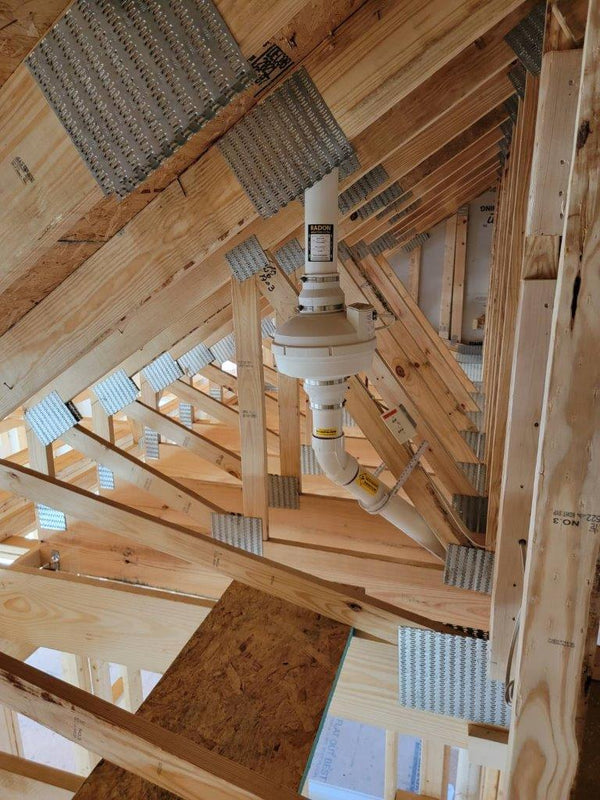
Radon reduction in a rental property usually involves active sub-slab depressurization
— a system that uses a dedicated fan and vent pipe to draw radon out from beneath the
foundation and exhaust it safely outside. The EPA estimates that the cost of radon
mitigation for a typical single-family home ranges from $800 to $2,500. Understanding
how these systems function can help both landlords and tenants evaluate whether
proposed remediation is adequate, since how radon gas mitigation systems work can
vary depending on the home’s structure and airflow conditions.
According to the EPA's radon health risk data, even homes with very high radon
concentrations can be brought below the 4 pCi/L action level with the right mitigation
system in place. That gives landlords a realistic pathway to resolution — and tenants a
clear benchmark to hold them to.
Making Radon Awareness Part of Every Move
Radon testing in rental properties is too often treated as an afterthought — something
neither party thinks to raise until after the lease is signed and boxes are unpacked. For
tenants, the most effective strategy is to bring it up before committing to a property. Ask
whether the unit has been tested, request copies of any existing results, and if no test
has been done, ask the landlord to arrange one before move-in. If the landlord declines,
a short-term test kit costs as little as $15 and can be set up in minutes. Factor the
testing timeline into the move-in date so there is time to act on the results if needed.
For landlords, proactive testing before a new tenancy begins is both a legal safeguard
and a practical demonstration of responsible property management. Documented test
results reduce liability, build tenant trust, and head off disputes that can arise mid-
tenancy when elevated radon is discovered by the tenant rather than disclosed upfront.
Ground-floor and basement units carry the highest risk and should be prioritized.
Retesting after any significant structural work — foundation repairs, new HVAC
installation, or basement finishing — is also strongly advisable, since changes to a
building's structure can alter how radon accumulates indoors.