


The Overlooked Indoor Air Quality Questions to Ask When Moving Into a Previously Renovated Home
New floors, fresh paint, and a remodeled basement can make a house feel move-in ready. Yet the same work that makes a home look new can leave behind dust, chemical fumes, hidden moisture, and even changed radon levels. Most buyers and renters ask about finishes and appliances, not about the air. A few extra questions about indoor air quality in a renovated home, asked before your boxes arrive, can spare you headaches and allergy flare-ups. They can also reduce longer-term health risks.
Why Does Indoor Air Quality in a Renovated Home Need Attention?
Renovations change how a house breathes, and the changes are not always visible on a walkthrough. New windows, insulation, and sealed gaps make a home more energy efficient, but they also reduce the natural air exchange that once diluted indoor pollutants. At the same time, new materials release their own emissions for weeks or months.
Radon adds a less obvious layer. Radon is a colorless, odorless radioactive gas that forms when uranium breaks down in soil and rock. It can seep into a house through the foundation. Work on a basement, slab, or crawl space can open new entry points. The link between radon exposure and indoor air quality is easy to overlook, because nothing about the gas announces itself.
How Should You Prepare the House Before Move-In Day?
Prepare the house by clearing out renovation residue and airing it out before you bring in furniture. Construction dust settles on shelves, inside vents, and along baseboards, and it can contain fine particles from drywall, sanding, and old materials.
Start by opening windows and running exhaust fans for several days, if the weather allows. Then deep clean every surface, from cabinet interiors to light fixtures. Moving guides recommend getting this done before you make yourself at home, since boxes and furniture trap dust in corners once they arrive. A HEPA vacuum and damp cloths, rather than dry dusting, keep fine particles from drifting back into the air.
What Questions Should You Ask the Seller or Landlord?
The most useful questions focus on what changed, when it changed, and whether anyone checked the results. Ask for receipts, permits, or contractor notes whenever possible.
Did Anyone Test for Radon After the Work?
Ask whether anyone tested for radon after the renovation ended, not only before it started. Foundation repairs, basement finishing, and new additions can all shift radon levels. A pre-renovation result may no longer reflect the house you are moving into. If the seller has no recent result, you can ask to make a new test a condition of the sale or lease. Understanding what home buyers need to know about radon testing helps you decide whether to request a new test before closing or signing.
Was There Water Damage Behind the New Walls?
Ask whether the renovation fixed a leak, flood, or moisture problem. Fresh drywall can hide mold if the underlying cause was never solved. Look for musty odors, stains near ceilings, or warped flooring, and request documentation of any water remediation. If mold was removed, ask who did the work and how the moisture source was repaired.
Were Older Materials Disturbed?
Ask how old the house is and what the crew removed during the work. Homes built before 1978 may contain lead-based paint, and older insulation, flooring, or pipe wrap can contain asbestos. Sanding, cutting, or demolishing these materials releases dust that lingers. Ask whether the contractor followed lead-safe work practices and whether any testing or abatement was done.
Which Paints, Floors, and Adhesives Were Used?
Ask about the products used, because many release volatile organic compounds (VOCs). VOCs are gases emitted by certain solids and liquids, including paints, varnishes, carpet glues, and some engineered wood. According to the EPA, levels of several organics average 2 to 5 times higher indoors than outdoors. Low-VOC or zero-VOC labels are a good sign, while a strong "new house" smell suggests materials are still off-gassing. Also ask when the work finished. Emissions are usually highest right after installation and drop over the following weeks, so timing matters.
Did the Renovation Change Ventilation or HVAC?
Ask whether the contractor changed the heating and cooling system, ductwork, or exhaust fans. A furnace sized for the old layout may not circulate air well through a new addition. Ducts can also collect construction debris, so ask when filters were last replaced and whether anyone cleaned the ducts after the work. If the home is now more tightly sealed, ask whether the contractor added mechanical ventilation, such as an energy recovery ventilator.
What Should You Do in Your First Few Weeks?
Your first weeks are the best time to set a baseline for the air you will breathe every day. A few simple habits make a real difference:
• Replace HVAC filters soon after moving in
• Keep windows cracked when weather allows
• Run bathroom and kitchen fans during and after use
• Watch for headaches, coughing, or irritated eyes at home
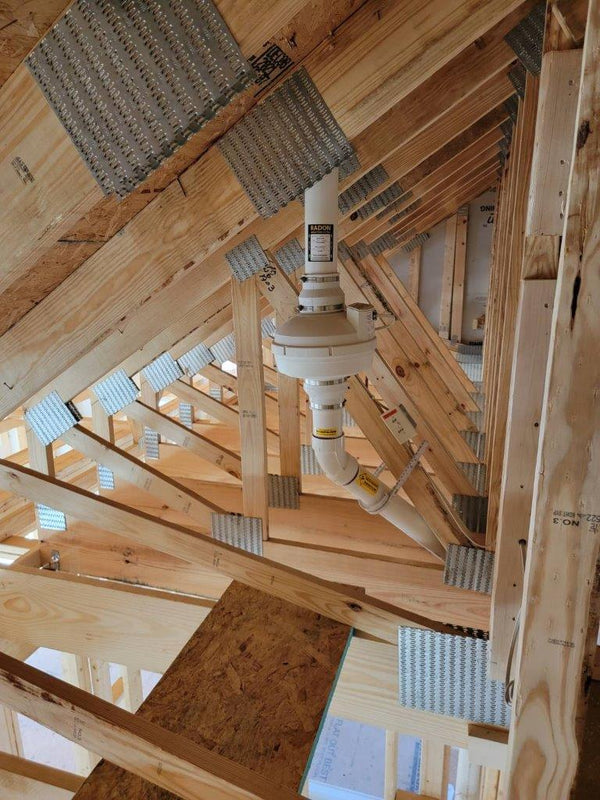
Radon deserves its own plan. A short-term test gives a quick snapshot within a few days, while a long-term test of three months or more shows your average exposure across seasons. Even if the seller provided a result, testing again after you settle in gives you a reading that reflects how your household uses the home. Guidance on how often you should test your home's radon levels recommends retesting after renovations and at least every two years. The EPA advises fixing a home if radon levels reach 4 picocuries per liter (pCi/L) or higher.
Breathing Easy in Your New Space
A beautiful renovation should make your home healthier, not just better looking. Asking clear questions about indoor air quality in a renovated home helps you spot problems while they are still easy to fix. Start with the big three: radon, VOCs, and moisture. Then build simple habits that keep the air clean. If no recent radon result exists, schedule a test before or right after move-in, so you can settle in with real peace of mind.