



The Role of Building Pressure Differentials in Radon Control
Radon can enter a home through small openings that you can easily overlook. Cracks in a slab and gaps around utility lines can provide a path for soil gas to enter. But openings alone don’t explain why radon moves into a house. Air pressure often provides the force that pulls soil gas through those entry points.
A home constantly exchanges air with the outdoors and the soil around its foundation. Temperature changes and normal household activities can shift pressure from one area to another. When indoor pressure drops below the pressure in the surrounding soil, the house can draw radon-bearing soil gas into the home. That relationship helps explain why many mitigation systems focus on pressure beneath the foundation. Keep reading to discover the role of building pressure differentials in radon control.
Why Pressure Changes Radon Movement
Air moves from areas of higher pressure toward areas of lower pressure. When the pressure inside the lowest level of a home falls below the pressure in the soil, air from beneath the foundation can move toward the lower-pressure space.
Radon travels with the soil gas. The gas may enter through construction joints or sump openings, as well as small gaps that homeowners can’t easily see. A pressure difference doesn’t create radon, but it can increase radon movement from the soil into the building.
Sealing a single crack may not solve a radon problem. Soil gas can find another route when pressure continues to draw air into the interior. Sealing can support a mitigation plan, but pressure control often addresses the force driving radon entry.
How the Stack Effect Changes Pressure
Indoor and outdoor temperature differences can create the stack effect. Warm indoor air tends to rise through a building and escape through openings near upper levels. As that air leaves, the home needs replacement air.
Some replacement air enters through doors or gaps in the exterior shell. In the lower parts of the home, replacement air can also enter through foundation openings that connect the building to the surrounding soil. During colder weather, a larger temperature difference can increase this upward airflow.
The lowest level of the home often develops negative pressure during strong stack-effect conditions. That pressure can increase the pull on soil gas near the foundation.
Household Equipment Can Shift Pressure
Many common appliances exhaust air from a home. Bathroom exhaust fans and clothes dryers remove indoor air while they operate. When air leaves faster than outdoor air replaces it, indoor pressure can drop.
Heating and cooling systems can also affect pressure when duct leakage alters airflow between rooms. A leaky return duct on a lower level may draw more air from that area. Closed interior doors can alter airflow when supply and return paths aren’t balanced.
These pressure changes show why radon control requires a whole-house view instead of attention to one crack or one room. A qualified radon professional can consider how the foundation and mechanical systems interact before choosing a mitigation approach.

How Active Soil Depressurization Helps
Active soil depressurization alters the pressure beneath the home. A mitigation system creates suction under the slab or another ground-contact area. That suction lowers the pressure below the foundation, so soil gas moves toward the system rather than toward indoor openings.
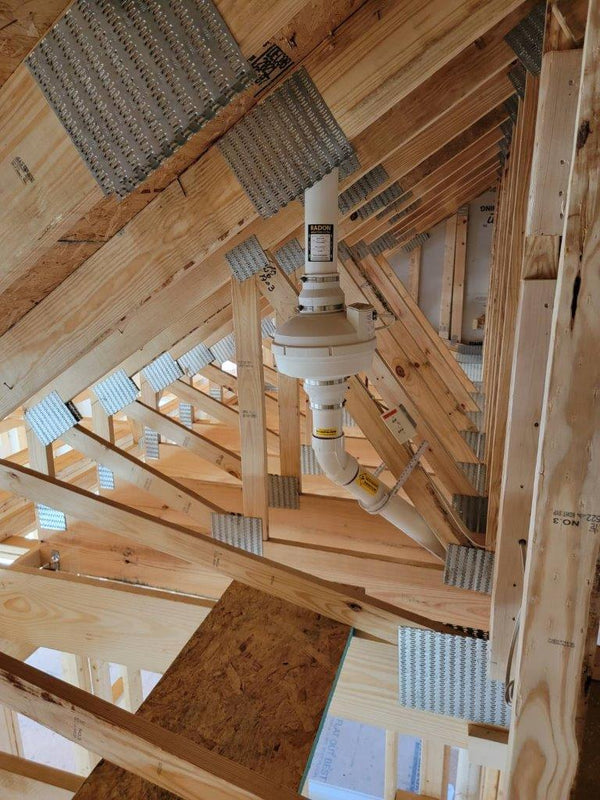
The system routes soil gas through vent piping and releases it outdoors at an appropriate discharge location. Radon fans provide continuous suction that maintains this pressure field. The goal isn’t to pressurize the living space. Instead, the system creates a lower-pressure zone beneath the building that draws in soil gas.
When the pressure below the slab remains lower than the pressure indoors, air movement through small foundation openings tends to flow downward rather than carry soil gas indoors. This pressure reversal plays a central role in many residential radon mitigation systems.
Pressure Field Extension Shows System Reach
A suction point only helps if its pressure influence reaches enough area beneath the foundation. Radon professionals use pressure field extension measurements to determine how far suction travels through the material beneath the slab. That information helps them determine whether the building needs another suction point.
Sub-slab material can affect how easily air moves. Coarse gravel may allow suction to spread farther, while dense soil can limit airflow. Foundation walls or separate slabs can interrupt the pressure field.
A professional can measure pressure at locations away from a suction point while applying vacuum. Those readings help guide system design and fan selection.
Building Design Affects Pressure Patterns
Every home develops its own pressure behavior. A single-story house with a basement may respond differently than a split-level home with several foundation sections. Crawl spaces or slab-on-grade additions can create separate ground-contact zones.
Air sealing can influence how pressure moves through a building. Tightening leaks in upper areas may reduce stack-driven airflow, while sealing foundation openings can reduce soil gas pathways. However, sealing alone doesn’t control every pressure difference beneath a home.
Mechanical changes may alter pressure after installing a mitigation system. A new exhaust fan or remodeled HVAC system can affect airflow through the building. Homeowners should keep radon testing in mind after major changes that can influence indoor pressure.
Weather Can Change the Balance
Outdoor conditions can alter the pressure difference between a home and the soil. Wind can create positive pressure on one side of a building and negative pressure on the other. Temperature changes can strengthen or weaken the stack effect.
Soil conditions can also affect how soil gas moves toward the foundation. Moisture can alter airflow through pores in the ground, while frozen soil can change the available paths near the surface. The pressure pattern around a home can vary over time, even when the building itself hasn’t changed.
These variations help explain why a single radon reading can’t capture every condition a home may experience. Testing gives homeowners a direct way to evaluate indoor radon rather than trying to predict levels from weather or building features alone.

Fan Power Isn’t the Whole Answer
More suction doesn’t automatically produce a better radon control system. A fan must match airflow resistance beneath the foundation and the layout of the vent system. A setup that moves plenty of air through open gravel may behave differently in compact soil.
System design also needs to account for the area under suction. If the pressure field can’t reach a separate slab, a stronger fan may not, by itself, solve the coverage problem. An additional suction point or a different piping layout may provide a better solution.
Keep Pressure Working in Your Favor
Radon control starts with understanding your home’s building pressure differentials. When indoor pressure drops below soil pressure, the building can draw radon-bearing soil gas through foundation openings. Mechanical equipment can influence that relationship, and weather can change it further.
Active soil depressurization uses the same airflow principle to create a lower-pressure zone beneath the foundation. A well-designed system draws soil gas toward vent piping before it enters the living space. When homeowners understand pressure differentials, the purpose of radon mitigation becomes much clearer.
Radon testing still provides the clearest answer about conditions inside a home. If testing shows elevated levels, a qualified radon professional can evaluate the building and identify pressure-related concerns before designing a mitigation system that fits the structure.