


Moving Into a Home After Major Foundation Repairs: When Should You Retest for Radon?
Foundation repairs seal the exact cracks and gaps that radon uses to enter a house, which sounds like good news until you realize the same work can just as easily open new pathways or trap gas that used to vent freely. Moving into a home after major foundation repairs means moving into a house whose radon profile has likely changed, whether the previous test was six months old or six years old. Underpinning, crack injection, slab replacement, and waterproofing all disturb the soil-gas seal a home relies on, and none of that shows up on a home inspection report the way a cracked foundation wall does.
Why Does Foundation Work Change Your Home's Radon Risk?
Foundation repairs change radon risk because most of the work happens exactly where radon enters: cracks, joints, and the soil-slab interface. Crack injection can seal one entry point while pressure shifts push gas toward a different, untested one. Underpinning that adds new footings disturbs soil directly beneath the house, sometimes loosening compacted earth that had previously blocked gas migration. A repair that fixes a structural problem can leave the radon picture completely different from whatever a pre-repair test showed, for better or worse.
How Do You Prepare for Foundation Repairs the Radon-Safe Way?
Preparing for foundation repairs the radon-safe way starts with testing before the work begins, not after. A baseline test taken right before repair work gives a real comparison point once the job is done, instead of guessing whether a post-repair reading reflects the repair or just normal seasonal variation. The same logic behind preparing a home remodel with radon in mind carries over directly to foundation work, since both disturb the soil-gas boundary a house depends on. Sharing that baseline number with the contractor also helps them flag if their work is likely to affect existing mitigation piping or sump systems.
What Should You Do With Your Belongings While the Foundation Work Happens?
Belongings need to come out of the work zone before foundation crews start, since dust, vibration, and shifting equipment access can damage furniture left in place. Underpinning and slab work in particular often require clearing an entire room down to bare floor, not just pushing furniture to one side. Homeowners tackling this for the first time often find that professional help can simplify your renovation, particularly when heavy furniture needs short-term storage rather than a permanent move. Getting belongings fully clear also gives the crew room to work faster, which shortens the disruption overall.
What Changes When You're Moving Into a Home After Major Foundation Repairs?
What changes when you're moving into a home after major foundation repairs is less about visible damage and more about air pathways nobody can see. A freshly repaired foundation might look better than it has in years, while the radon levels underneath it swing in either direction. Movers unpacking boxes in a newly repaired basement are often the first people breathing whatever air that space now produces, since post-repair testing frequently gets skipped in the rush to move in. Treating the move-in date as a testing deadline, not an afterthought, closes that gap.
How Long Should You Wait Before Retesting?
Wait until construction dust and disturbance have fully settled, generally a few days after the crew leaves, before starting a short-term radon test. Short-term tests need closed-house conditions for 12 hours beforehand and 48 hours during testing, so scheduling one while workers are still coming and going will produce an unreliable reading. Worth confirming before setting a test date:
● Whether the repair disturbed a sump pit or existing radon mitigation piping
● Whether HVAC or ventilation equipment was also modified during the same project
● Whether windows and doors can realistically stay closed for the full test window
● Whether a longer-term test, 90 days or more, makes more sense than a quick short-term check
Does Retesting Responsibility Change If You Rent Instead of Own?
Retesting responsibility does shift depending on who holds the lease versus who holds the deed. An owner who just had foundation work done is responsible for testing their own home on their own timeline. In a rental unit, the question of who handles testing in rental properties and when becomes more relevant, since landlords who complete foundation repairs on an occupied or soon-to-be-occupied unit may have separate disclosure or testing obligations depending on the state. Tenants moving into a unit with recent foundation work should ask directly whether a post-repair test happened before assuming one did.
What Happens If Your Retest Comes Back High?
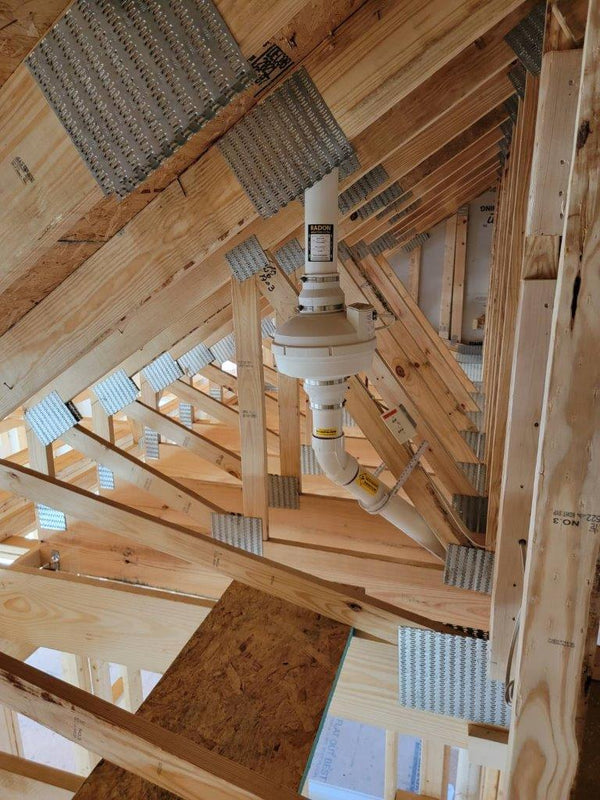
A high retest result means scheduling a mitigation system, not panicking about the repair that was just completed. Foundation work and radon mitigation solve different problems, so a structurally sound repair can still coexist with elevated radon that needs its own fix. Knowing what a professional mitigation installation actually involves beforehand makes the process far less intimidating, especially for someone who just went through a separate round of foundation contractors. Most systems install in a single day and bring levels below the EPA action threshold within 24 hours of activation.
What Does the CDC Actually Recommend After Major Renovation Work?
The CDC is direct about this: renovations that touch a home's structure call for a new test once the work is finished, regardless of what a previous test showed. According to the CDC's guidance on testing homes for radon, major structural renovations can change radon levels in either direction, and testing again after the work is completed is the only way to know which way it moved. That guidance is aimed specifically at structural work like foundation repairs, not routine maintenance, which is why a repair job triggers a retest in a way that repainting a basement wall wouldn't.
Don't Let a Fixed Foundation Distract From an Unfinished Job
Moving into a home after major foundation repairs feels like the hard part is over once the crew packs up and the cracks are gone. The radon question is a separate job that starts right where the repair work ends: test before the work begins if possible, wait for dust and disruption to settle, then retest under proper closed-house conditions once everyone's back in the house. A newly solid foundation and a newly tested radon level are two different kinds of peace of mind, and moving in without the second one leaves half the job undone. Schedule the retest before the boxes are even fully unpacked.